How to Design an Ireland Compliant Botox Website Page That Converts
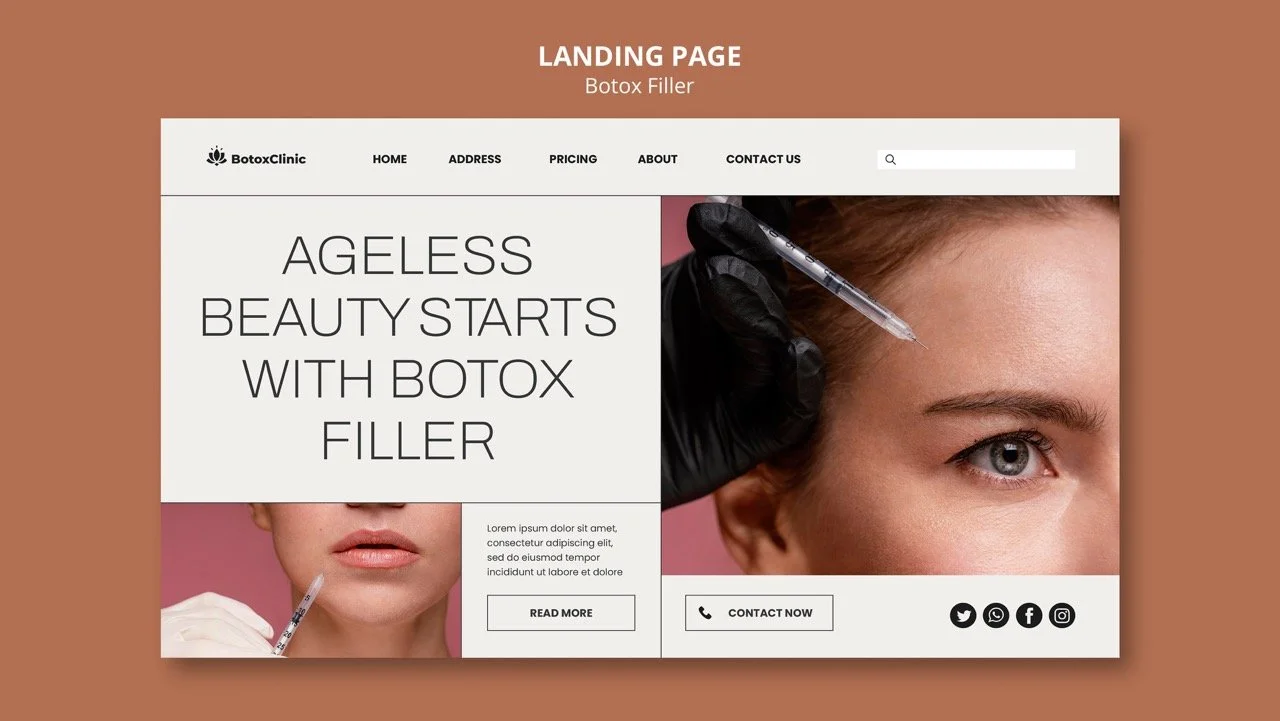
This approach is illegal under breach of S.I. No. 541/2007—the regulations governing medicinal advertising.
The digital landscape for medical aesthetics in Ireland is, to put it mildly, a bit of a regulatory minefield. We see it all the time: clinics pouring heart and soul into a sleek new website, only to find themselves on the wrong side of a Health Products Regulatory Authority (HPRA) notice. Or worse, they play it so safe that the page feels like a dry medical textbook, failing to connect with the very people they aim to help.
The challenge? You aren’t just designing a "Botox Ireland" page. You are building a digital consultation room. In Ireland, the rules are stringent because we are dealing with a prescription-only medicine (POM). This means the old-school "hard sell" isn't just distasteful; it’s actually illegal.
But here’s the truth: compliance doesn’t have to kill your conversion rate. In fact, in a market increasingly wary of "cowboy" injectors, high-level clinical ethics are your strongest USP. If you want to rank for anti-wrinkle injections in Ireland while staying firmly within the lines, you need a strategy that leads with education and closes with professional authority. You can also use our free compliance audit tool to flag potentially problematic prescription-only medicine references and page metadata before publication.
Advertising Rules for Botox in Ireland
Before we talk about pixels and call-to-action buttons, we have to talk about the law. If you’re operating a cosmetic clinic in Ireland, you’re under the watchful eye of both the HPRA and the Irish Medical Council.
Why Botox Is Classified as a Prescription-Only Medicine
It’s easy to forget, amidst the social media noise, that botulinum toxin is a potent neurotoxin. In Ireland, it is strictly classified as a Prescription-Only Medicine (POM). This isn't just a bit of red tape; it’s a safety mechanism. Because it requires a prescription, it cannot—by law—be advertised to the general public.
This is the "hamster wheel" many marketers get stuck in. They want to rank for the "B-word," but mentioning it too prominently in a promotional context can trigger a breach of S.I. No. 541/2007—the regulations governing medicinal advertising.
What Irish Clinics Can and Cannot Say
The line between "information" and "promotion" is razor-thin. You cannot use the brand name "Botox" in your headings or meta-descriptions in a way that promotes the sale of the drug. You cannot use "Before and After" photos that imply a guaranteed result or use celebrities to endorse the treatment.
However, you certainly can educate the public about the consultation process. You can discuss "anti-wrinkle treatments" or "facial muscle relaxation" as a service. Most importantly, you can—and should—highlight your medical aesthetics Ireland credentials. The goal is to move away from selling a vial and start selling a medical assessment.
Structuring a High-Converting (Compliant) Botox Website Page
A high-converting page in this niche doesn't look like a sales page. It looks like a guide. When a potential patient searches for Botox treatment in Ireland, they aren't just looking for a price list; they are looking for a practitioner they can trust with their face.
Lead With Education, Not Promotion
Your H1 (title header) should be clear but clinical. Instead of "Get Cheap Botox Today," think "A Patient’s Guide to Anti-Wrinkle Injections in Ireland." Start by explaining the science. How does the treatment actually work? Use phrases like "muscle relaxation mechanism" and "neuromodulators." By using technical, factual language, you bypass the "salesy" vibe that triggers both regulatory red flags and patient scepticism. You are the expert advisor, not the shopkeeper.
Clearly Explain the Consultation-First Approach

Consultative approach will give your clinic credibility and project professionalism
This is your most important conversion element. In Ireland, a Botox consultation is not a formality; it is a legal requirement. Your copy must reflect this. Explain that a full medical history review is the first step, that not everyone is a candidate for treatment, and that informed consent is a process, not a signature.
Instead of "Book Your Botox Today," use a compliant CTA such as: "Arrange a Medical Assessment to Discuss Your Suitability." This builds massive trust. It tells the patient, "We care more about your safety than your credit card."
Essential Sections Every Irish Botox Website Page Should Include
To satisfy both Google’s E-E-A-T requirements and the HPRA’s transparency needs, your page needs a specific anatomy.
What the Treatment Involves
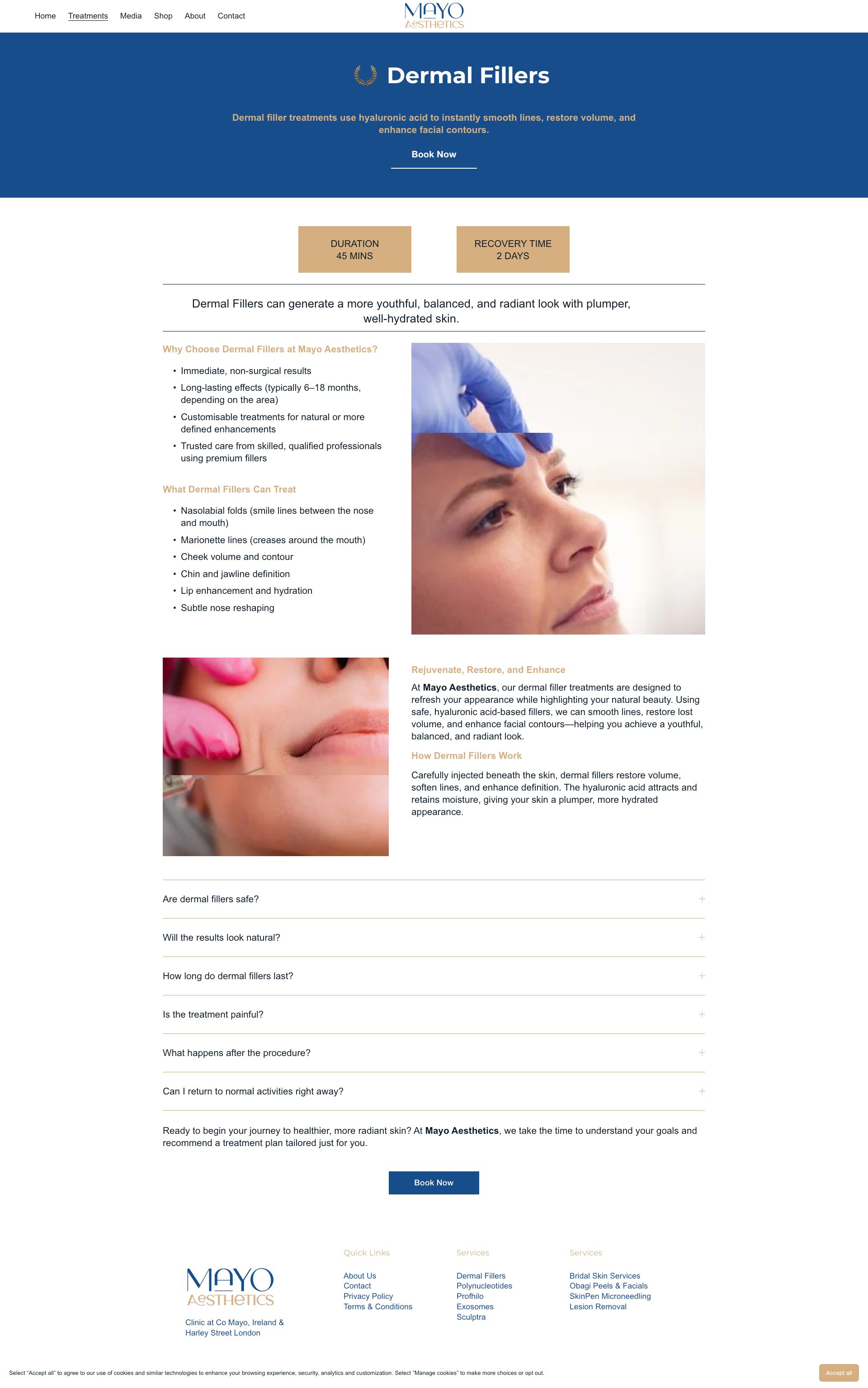
Your treatment pages need to be open and honest addressing all your patience concerns
Keep it factual. How long does the appointment take? Typically 15 to 30 minutes. When do results appear? Usually 4 to 10 days. How long do they last? Typically 3 to 4 months. Avoid "zombie zones"—don't promise a "wrinkle-free life." Use cautious qualifiers: "Results typically vary," or "Patients often report a refreshed appearance."
Areas Commonly Treated
Rather than listing "Botox for Crow's Feet" as a product, frame it as an educational list of "Common areas patients ask about." This includes vertical frown lines between the brows, horizontal forehead lines, and fine lines around the eyes.
Risks and Possible Side Effects
I suspect some clinics avoid this section for fear of "scaring off" clients. In reality, listing risks is a conversion booster. It shows you are a registered medical practitioner who prioritises patient safety. Mention temporary redness, mild swelling, or the rare possibility of ptosis (eyelid drooping). Transparency is the ultimate trust signal.
Who May Not Be Suitable
Include a "Suitability" section. If someone is pregnant, breastfeeding, or has a neuromuscular disorder like Myasthenia Gravis, they need to know upfront that injectable treatments in Ireland may not be for them. This level of candour increases your authority and shields you from compliance risks.
Trust Signals That Improve Conversion (Without Breaking Regulations)
In the "big fish in a niche pond" world of Irish aesthetics, your reputation is your currency.
Practitioner Credentials
Don't just say you're a doctor. List your Irish Medical Council (IMC) registration number. Mention your years of experience in medical aesthetics in Ireland. If you have advanced training or belong to professional bodies like DANAI (Dermatology Aesthetic Nurses Association Ireland), shout about it.
Clinic Standards
Is your clinic a sterile, medical environment? Do you have emergency protocols for rare complications? Patients in Ireland are increasingly looking for "medical-led" rather than "salon-based" treatments.
Transparent Pricing Structure
Avoid "From €150" splash banners. Instead, use wording like: "A personalised treatment plan and transparent pricing will be provided following your initial clinical assessment." It’s professional, it’s clinical, and it’s compliant.
Designing the Page for E-E-A-T (Google Compliance)
Google loves "Experience, Expertise, Authoritativeness, and Trustworthiness," especially for "Your Money or Your Life" (YMYL) topics like healthcare. To build this:
Experience: Mention your history of treating Irish patients.
Expertise: Highlight your medical degrees and specific injectable certifications.
Authoritativeness: Link out to the HPRA or the Irish Medical Council. It shows you aren't afraid of the regulators because you follow their rules.
Trustworthiness: Ensure your physical Irish address and clear contact details are in the footer.
Internal Linking Strategy
A well-structured site keeps the user engaged. Link your Botox Ireland page to strategic internal content like "About Our Medical Team," "Patient Safety & Clinical Standards," or your "Skin Consultation Process." This improves topical authority and dwell time.
Conversion Elements That Are Ireland-Compliant
Conversion doesn't mean "Hard Sell." It means "Next Step." Safe, high-converting CTAs include: "Schedule a Confidential Consultation," "Request a Call Back from Our Clinical Team," or "Begin Your Patient Journey." Avoid countdown timers, influencer endorsements, or package deals that incentivise more treatment than medically necessary.
The Final Word
Designing a compliant website page for the Irish market isn't about finding loopholes; it's about embracing a higher standard of communication. When you stop trying to "sell" a product and start trying to "serve" a patient with expert information, the conversions happen naturally. You aren't just another clinic on Google; you are a trusted medical authority. And in this industry, that is the only way to win the long game.
Frequently Asked Questions About Botox in Ireland
Is Botox legal in Ireland?
Yes, botulinum toxin is a licensed, prescription-only medicine in Ireland. It must be prescribed by a qualified medical doctor or dentist and should only be administered by a registered medical professional.
Can Botox be advertised in Ireland?
Direct-to-consumer advertising of brand-name prescription medicines like Botox is prohibited. Clinics can, however, provide factual, educational information about the services they offer and the consultation process for anti-wrinkle treatments.
Where can you get a copy of the Irish HPRA Guide to Advertising?
You can get a full copy of the requirements by using this link: HPRA Guide To Advertising
How long does Botox last?
While every patient is different, the effects of muscle-relaxing injections typically last between three and four months. Factors like metabolism and the area treated can influence longevity.
Is Botox safe?
When administered by a qualified registered medical practitioner in a clinical setting, it has a long-standing safety profile. However, a full medical assessment is required to ensure it is appropriate for you.
Do I need a prescription?
Yes. Since it is a Prescription-Only Medicine (POM), a doctor or dentist must assess you and write a prescription before the treatment can be administered.
How much does Botox cost in Ireland?
Pricing is determined by the complexity of the treatment and the volume of product required. A definitive quote is provided only after a face-to-face consultation and suitability assessment.