The Importance of Branding and Market Positioning for Aesthetic Clinics in the UK & Ireland
Branding & Strategy · Market Position · Aesthetic Clinics

Walk through any high street in London, Manchester, Dublin, or Edinburgh and you will notice something: aesthetic clinics have become almost ubiquitous. Injectable treatments, skin boosters, dermal fillers, laser therapies, peels, and skin health consultations are now offered by hundreds of providers in every major city across the UK and Ireland.
The numbers bear this out. The UK aesthetic industry is now valued at over £3.6 billion annually, with non-surgical procedures growing at 14% year on year. There are more than 5,000 independent aesthetic clinics currently operating in the UK alone, and the market shows no signs of slowing. In Ireland, demand is mirroring global trends — Dublin in particular is emerging as a significant hub, with an increasingly competitive local market.
The challenge for clinic owners is no longer finding patients who want aesthetic treatments. The challenge is giving them a compelling reason to choose your clinic over the one three streets away.
That is where branding and market positioning become genuinely important — not as marketing buzzwords, not as exercises for large corporate groups, but as practical tools that shape how patients perceive your clinic, how much they are willing to pay, and how readily they recommend you to others. In aesthetic medicine, branding is not decoration. It is the trust framework that helps patients decide whether your clinic is credible, safe, and aligned with their expectations.
It is also worth noting from the outset that in both the UK and Ireland, aesthetic clinic marketing operates under specific regulatory constraints. In the UK, the ASA and CAP Code make clear that prescription-only medicines cannot be advertised directly to the public. In Ireland, the HPRA and the Advertising Standards Authority of Ireland apply equivalent rules. Clinics that build their visibility purely around treatment names and promotional offers are not just failing commercially — they may be actively breaching advertising standards. Strong, compliant branding provides a smarter and more sustainable path.
What Branding Really Means for an Aesthetic Clinic
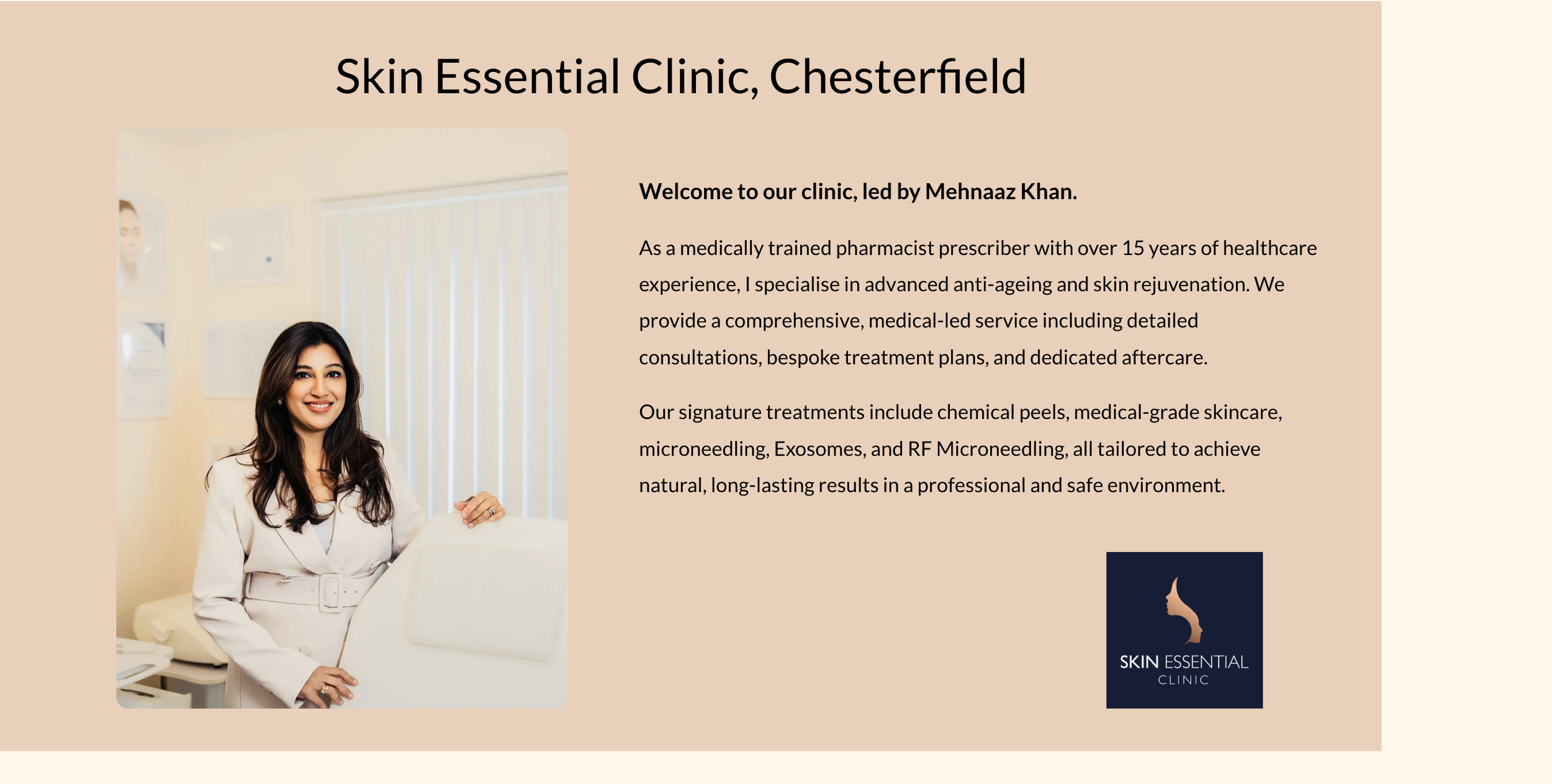
Most clinic owners, when they think about branding, think about their logo. Some think about their colour palette or their Instagram aesthetic. A minority think about the font on their price list. All of these things matter — but they are the surface layer of branding, not the substance of it.
Aesthetic clinic branding is the complete perception your clinic creates in the mind of a prospective patient, formed long before that patient ever books a consultation. It is communicated through every touchpoint they encounter: the way your website explains treatment suitability, the tone of your social media captions, the professionalism of your consultation process, the quality of your aftercare, the consistency of your patient reviews, and the clinical credibility your practitioners demonstrate publicly.
A clinic that has a beautifully designed logo but answers enquiries casually, posts inconsistently, and has no practitioner information visible on its website has a brand problem that no graphic designer can solve.
Strong aesthetic clinic branding communicates safety, professionalism, medical credibility, and a patient-first approach. It signals that the clinic understands its clients are not simply buying a beauty service — they are entrusting someone with their face, their skin, and their confidence. That distinction shapes everything from the words on your homepage to the way your reception team handles a price enquiry.
| Branding is the full patient perception AND experience, not the graphic design layer. That distinction alone saves clinic owners from spending thousands on a logo while the clinic still sounds like a discount salon. |
Why Your USPs Are the Foundation of Your Brand
Before you design a logo, write a website, or post a single piece of content, you need to be clear on one thing: what makes your clinic genuinely different?
Your Unique Selling Propositions (USPs) are not a marketing exercise. They are the honest answer to the question every prospective patient is quietly asking when they land on your website or Instagram profile: why should I choose you over the twelve other clinics within a ten-mile radius?
Strong USPs in the aesthetic sector come in different forms. They might be clinical — doctor-led injectable expertise, nurse prescriber-led model, specialism in a particular condition or treatment. They might be experiential — the discreet, unhurried consultation process; the warmth and privacy of the environment; the aftercare approach that treats the patient as a whole person rather than a treatment slot. They might be strategic — a specific patient demographic served exceptionally well, a technology investment that delivers results your competitors cannot replicate, a treatment philosophy built around skin health rather than instant gratification.
What they should never be is generic. “Natural results.” “Personalised care.” “Experienced team.” These phrases appear on virtually every clinic website in the country. They are not USPs — they are the baseline expectation. A USP is what you offer that the clinic down the road does not.
Critically, your USPs only become commercially powerful once you are clear on who your target patient is. Market positioning cannot work in a vacuum. The clinic that tries to attract everyone — the twenty-five-year-old looking for lip filler, the fifty-five-year-old managing menopausal skin changes, the male professional wanting subtle anti-ageing, the bride planning her skin twelve months ahead of her wedding day — will resonate strongly with none of them. Clarity about your ideal patient is what allows you to craft positioning that lands.
The most commercially effective clinic brands start with a precise patient profile: age range, concerns, motivations, income level, treatment awareness, and what they genuinely want from the experience. Everything — the visual identity, the website language, the social media tone, the treatment menu structure, the consultation process — should be built around that person.
| Positioning can only be effective once the clinic owner has identified who they are actually building for. Without that clarity, even the most beautiful brand is just decoration. |
Why Using a Professional to Design Your Brand Matters
There is a temptation, particularly for new clinics watching their setup costs carefully, to use a DIY logo tool, a Canva template, or a free platform to create visual assets. The results are usually identifiable within seconds — and not in a good way.
This matters more than most clinic owners appreciate. Research consistently shows that customers judge the quality of a business’s services by the quality of its branding. In a market where patients are making decisions about clinical procedures that carry real risk, an amateur-looking visual identity does not just fail to impress — it actively raises doubts. Poor branding is estimated to contribute to 7% of small business failures. More immediately, a forgettable or unprofessional visual identity can influence up to 33% of a business’s annual revenue through the erosion of trust it causes before a patient ever picks up the phone.
The particular danger with DIY branding in aesthetics is that the damage is largely invisible and often irreversible without a full rebrand. A patient who visits your website, sees a generic template logo and mismatched photography, and quietly leaves to book with a competitor — you will never know that happened. There is no notification, no feedback, no second chance to correct the impression. The patient is simply gone.
What makes this especially costly is that first impressions in the aesthetic sector carry disproportionate weight. Patients choosing a clinic for injectable treatments or laser therapies are in a highly considered, emotionally invested decision-making process. The threshold for trust is high. And once a prospective patient has formed a negative or uncertain impression of your brand, that impression is extraordinarily difficult to undo. It takes sustained, consistent, professional-quality brand experience over time to shift a first impression — and most clinics never get the chance to try, because the patient has already booked elsewhere.
Starting strong matters more than starting cheap. A DIY logo can be replaced, but the clients lost while it was representing your clinic cannot be recovered. The cost of poor branding is not just what you paid for the template — it is every consultation that should have been yours.
Professional brand design in the aesthetic sector is not simply an exercise in choosing the right typeface. A skilled designer working in this space will consider the emotional associations of every visual element: the psychological warmth or clinical authority of a colour palette, the sophistication versus approachability communicated by typography choices, the layout principles that guide a patient from curiosity to confidence on a homepage. These are not instinctive decisions. They require experience of what works in this specific market, with this specific audience.
Beyond the aesthetic impact, there is also the practical question of consistency. A professional brand produces a complete visual system — logo, typography, colour codes, photography guidelines, template layouts — that can be applied consistently across your website, social media, treatment menus, signage, and correspondence. Inconsistent visuals across channels are one of the most common trust-eroding mistakes we observe across clinic websites. Patients notice, even if they cannot articulate why.
What Market Positioning Means for Aesthetic Clinics
If branding is how your clinic feels, market positioning is the space your clinic occupies in the minds of your ideal patients. Specifically, it answers the question: why should a patient choose you instead of the clinic with similar treatments, similar prices, and a similar social media presence just down the road?
Strong positioning examples for aesthetic clinics might look like: the doctor-led injectable clinic for natural-looking results; the luxury skin clinic for high-net-worth patients; the discreet aesthetic clinic for professionals who value privacy; the evidence-led skin health clinic; the approachable local clinic for first-time aesthetic patients; or the regenerative aesthetics clinic focused on long-term skin health rather than short-term fixes.
Notice that none of those positions are defined by treatments alone. They are defined by the type of patient the clinic is built for, the approach the clinic takes, and the outcomes the clinic prioritises. In cities like London, Manchester, Birmingham, Dublin, Cork, Belfast, Leeds, and Glasgow, patients often have a dozen or more providers within a short distance. Without a clear position, clinics default to competing on price — and that is a race that damages the entire market and rarely produces sustainable growth.
| Compliance note: ASA guidance for cosmetic interventions warns marketers not to trivialise procedures, exploit insecurities, or make irresponsible claims. Discount-led positioning that uses urgency language or fear-based messaging risks breaching these rules as well as weakening the clinic’s long-term brand equity. |
Positioning Niches That Drive Real Growth
The clinics that build the strongest brands in the UK and Irish market tend not to try to be everything to everyone. They identify a specific patient need, build genuine depth in that area, and communicate it clearly and consistently. These six core areas are some of the most commercially powerful positioning niches currently operating in the sector.
Skin Health & Acne
Acne is not a teenage concern — and the market has shifted to reflect that. Adult acne, including hormonal breakouts in women aged 25 to 55, is one of the most common presenting concerns in aesthetic clinics across Ireland and the UK. The UK anti-acne treatment market was valued at £245 million in 2024 and is projected to grow at 11.5% year on year to 2030, with laser and light therapies representing the fastest-growing treatment segment.
Positioning your clinic as the go-to for acne — not just for teenagers, but for adult women dealing with hormonal breakouts, post-pill acne, or the skin confidence concerns that come with persistent blemishing — is a highly defensible niche. The demand is large, the emotional stakes are high, and the patient lifetime value is significant because effective acne management is rarely a single-treatment journey.
A clinic that clearly positions itself as the expert for acne-prone skin — through treatment protocols, before-and-after content, patient education, and a tone of voice that treats adult acne as a genuine clinical concern rather than a cosmetic inconvenience — will consistently outperform a clinic that mentions acne as one of twenty conditions on a generic treatments page.
Wedding Skin & Bridal Aesthetics
Pre-wedding aesthetic preparation has become a significant and growing revenue category for clinics across the UK and Ireland. Brides — and increasingly grooms and wider wedding parties — are planning skin journeys six to twelve months ahead of their wedding date, with treatments spanning skin boosters, laser resurfacing, HydraFacial programmes, anti-wrinkle injections, and bespoke skincare protocols designed to peak on the day.
Pinterest alone recorded more than 7 billion wedding-related searches globally in 2025, reflecting the scale of planning investment in this category. Bridal clients tend to be high-engagement, high-commitment patients. They plan ahead, follow recommendations carefully, return for multiple treatment sessions, and refer extensively within their social circle — bridesmaids, mothers of the bride, family members.
A clinic that develops a clearly communicated bridal skin proposition — with a defined programme, a clear timeline, before-and-after content from real clients, and a consultation specifically structured around the wedding date — creates a recurring seasonal revenue stream that operates alongside the broader treatment menu. The key is to go beyond mentioning weddings in passing and build it into the positioning: this is who we are for, this is what we do, and this is why couples in this area plan their skin with us.
Menopause & Hormonal Skin Health
Menopause has emerged as one of the most significant positioning opportunities in the aesthetic sector in recent years — and it is still significantly underprovided for. Women navigating perimenopause and menopause experience a cascade of skin changes: loss of collagen and elasticity, increased dryness and sensitivity, hormonal acne, hair thinning, pigmentation, and changes in skin texture that accelerate rapidly if left unaddressed. NHS support in this area remains limited, which means more women are turning to private aesthetic clinics and practitioners for help.
The menopause skincare solutions market globally is valued at over £2.6 billion and is projected to grow at 9.2% year on year to 2035. Sales through dermatology and aesthetic clinics specifically are projected to grow at 12.7% annually from 2026. The patient within this demographic tends to be articulate, research-led, willing to invest in evidence-based solutions, and deeply loyal to practitioners who treat their concerns with clinical seriousness rather than cosmetic flippancy.
A clinic positioned as a genuine specialist in menopause and hormonal skin health — with dedicated content, a consultation approach that reflects the complexity of this patient experience, and treatment protocols that address the full range of menopausal skin concerns — will consistently attract a high-value, underserved patient demographic. This is not a niche that requires enormous clinical investment to enter. It requires positioning, communication, and a genuine commitment to understanding what this patient actually needs.
Men’s Aesthetics
Men’s aesthetics is no longer a niche. It is a fast-moving mainstream category that most clinics are still significantly underprepared for. A survey by the British College of Aesthetic Medicine showed a 70% rise in men getting aesthetic treatments since 2021. Men now account for approximately 21% of all aesthetic patients, with enquiries from male clients rising 30% in the past year alone. Face and neck procedures for men in the UK specifically rose by 26% between 2024 and 2025.
At a global level, the male aesthetics market grew from $5.91 billion in 2024 to $6.34 billion in 2025, with a projected CAGR of 7.5% through 2030. Male spending in the broader beauty, health, and pharmacy category in the UK increased by 58% since 2020 — outpacing the growth in women’s spending over the same period.
The men walking into aesthetic clinics today are not the outliers of five years ago. They are professionals who recognise that their appearance has become more visible and more consequential in a world of video calls, LinkedIn profiles, and high-resolution social media. They are booking directly, arriving prepared, and spending at a premium when they trust the clinic they’ve chosen.
Most clinics currently serve male patients as a secondary demographic — mentioning men on the website as an afterthought rather than building specific content, specific consultation language, and specific positioning around their experience. The clinic that actively positions itself as a place where men are genuinely welcome, properly understood, and expertly treated — without the language, photography, and tone that signals “this is designed for women” — occupies a position that is still largely unclaimed in most local markets.
Skin Confidence & Pigmentation
Pigmentation, melasma, post-inflammatory hyperpigmentation, and sun damage are among the most searched skin concerns across the UK and Ireland. Patients dealing with these conditions are often high-frustration, having tried multiple over-the-counter solutions without result. They arrive at a clinic ready to invest — if they trust that the practitioner genuinely understands the complexity of their concern.
A clinic positioned around skin confidence and pigmentation — with content that specifically addresses the emotional experience of living with visible pigmentation, the treatment pathways that actually work, and the realistic timelines involved — creates a powerful magnet for a highly motivated patient type. This is not a generic “skin health” position. It is a specific, emotionally resonant one that speaks directly to a patient who has been looking for the right expert for a long time.
Regenerative Aesthetics & Longevity
Regenerative treatments — polynucleotides, exosomes, biostimulators, skin boosters, advanced energy-based devices — are the fastest-growing segment of the UK aesthetic market. Regenerative and laser rejuvenation treatments saw a 25% and 27% increase, respectively in 2024. The shift away from structural volume enhancement toward skin quality, collagen stimulation, and long-term tissue health represents both a clinical trend and a positioning opportunity.
Clinics that position themselves around regenerative aesthetics and longevity — building their messaging around skin health over structural change, long-term results over instant fixes, and evidence-led approaches over trend-driven treatments — are attracting a sophisticated, increasingly mainstream patient demographic. This position also carries natural compliance advantages, since it moves away from the efficacy claims and before-and-after comparison territory that is most heavily regulated.
Why Branding Is So Important in the Aesthetic Industry
Aesthetic Treatments Are Personal and Trust-Based
Patients considering aesthetic treatments are not making a straightforward purchasing decision. They are weighing up the fear of looking overdone against the desire for natural results. They are thinking about the risk of complications, the quality of aftercare, the credibility of the practitioner, and whether the clinic will respect their privacy. Research from YouGov and the Nuffield Council on Bioethics confirms that concerns about safety, qualifications, and the normalisation of cosmetic procedures consistently rank highly among both treatment users and the general public. A strong clinic brand directly addresses these concerns before a patient ever picks up the phone.
Patients Research Extensively Before They Book
The journey of a new aesthetic patient typically involves multiple research touchpoints before any booking takes place. Studies on health-related consumer behaviour consistently show that patients check Google reviews, evaluate website quality, look for practitioner credentials, review before-and-after results, and assess the professionalism of the consultation process. A 2023 Consulting Room survey found that over 70% of aesthetic treatment seekers conduct online research before choosing a provider, with clinic website quality and verified reviews ranking as the two most influential factors.
A clinic with strong, consistent branding converts this research process in its favour. A clinic with weak or generic branding loses patients at the research stage to a competitor whose digital presence communicates more confidence — even if the clinical quality is equal or inferior.
Trust Reduces Price Sensitivity
One of the most commercially significant effects of strong positioning is that it reduces price sensitivity among the patients you most want to attract. A clinic that clearly communicates medical expertise, ethical consultation practice, patient suitability assessment, robust safety protocols, and premium aftercare does not need to compete on treatment price. It competes on value, and value is a much more defensible position.
Clinics that attract patients based primarily on discounts tend to attract patients whose loyalty is to the discount, not the clinic. Clinics that attract patients through trust tend to retain them long-term, and those patients refer others looking for exactly the same thing.
Why Positioning Helps Clinics Stand Out in the UK & Ireland
The aesthetic clinic marketing of most clinics in the UK and Ireland shares a common problem: the messaging sounds identical. “Enhance your beauty.” “Look younger.” “Natural results.” “Confidence starts here.” These phrases are safe, inoffensive, and completely forgettable. They tell a prospective patient nothing about why this clinic is different from the one three postcodes away.
The difference between weak and strong positioning is almost always specificity. Instead of “We offer anti-wrinkle injections and dermal fillers,” a well-positioned clinic says: “We help professionals achieve subtle, natural-looking results through doctor-led consultations and personalised treatment planning.” Instead of “Luxury aesthetic clinic in Dublin,” a positioned clinic communicates: “A discreet, evidence-led skin and aesthetics clinic for patients who want refined results without obvious intervention.”
That level of clarity does several things at once: it self-selects the right patients, it sets expectations accurately, it communicates expertise, and it makes the clinic genuinely memorable. In a competitive local market, memorable is not a luxury — it is a commercial necessity.
According to Google’s research on the patient journey, healthcare and aesthetic patients typically consult multiple sources before choosing a provider. The clinic that articulates its value proposition most clearly tends to win more consultations — not necessarily the clinic with the longest treatment menu or the lowest entry price.
The Role of Compliance in Aesthetic Clinic Branding
Compliance is not a separate consideration from brand identity — it is an integral part of it. In both the UK and Ireland, the regulatory environment for aesthetic clinic marketing has tightened considerably in recent years, and clinics that approach compliance as an afterthought are creating both legal risk and reputational risk.
In the UK, the ASA and CAP Code make clear that prescription-only medicines cannot be advertised directly to the public. This includes botulinum toxin products, which must not be referenced by brand name in promotional contexts and cannot be promoted using price-led, urgency-driven, or direct-to-consumer advertising language. The Botulinum Toxin and Cosmetic Fillers (Children) Act has made it a criminal offence to administer injectable botulinum toxin or fillers for cosmetic purposes to under-18s.
In Ireland, the HPRA is explicit that prescription-only medicines cannot be advertised or promoted to the public across any media channel, including clinic websites and social media. The Advertising Standards Authority of Ireland has actively investigated and upheld complaints against clinics promoting such treatments in breach of these rules.
Strong clinic branding in both markets should not rely on aggressive efficacy claims, fear-based messaging, or direct promotion of restricted medicines. Ethical positioning focuses on: consultation-led care, practitioner credentials, patient suitability, skin health, treatment planning, safety protocols, aftercare, and long-term patient relationships. This approach is not only compliant — it is also, as it happens, more persuasive to the kind of patient who becomes a loyal, long-term client.
| All treatment pages, advertising copy, social media content, and public-facing communications should be reviewed against the relevant UK and Irish advertising and healthcare rules before publishing. When in doubt, consult a specialist with knowledge of ASA/CAP, ASAI, and HPRA guidance for aesthetic clinics. |
How Branding Impacts Local SEO for Aesthetic Clinics
There is a direct, measurable connection between strong clinic branding and stronger local SEO performance. Google’s local search algorithm evaluates relevance, distance, and prominence — and prominence, the factor most influenced by branding activity, is typically the deciding variable between clinics of similar location and service offering.
A well-branded clinic tends to generate stronger review outcomes because patients have more confidence in leaving a positive review when the experience matches the brand promise they were sold. It generates higher click-through rates from search results because the clinic name, photography, and messaging communicate quality at a glance. It generates more direct searches — patients who have heard of the clinic searching specifically for it by name — which is a strong positive signal to Google’s ranking algorithm.
For clinics targeting high-intent local searches — “aesthetic clinic London,” “skin clinic Dublin,” “doctor-led aesthetic clinic Manchester,” “cosmetic clinic Cork” — the quality of the brand experience on the website is often the difference between a visitor who books and one who goes back to the search results.
| Traffic without trust is just expensive noise. Branding is what converts visibility into consultations — and consultations into the kind of long-term patient relationships that sustain a clinic. |
5 Key Elements of a Strong Aesthetic Clinic Brand
Clear Brand Positioning
Every strong brand strategy starts with a clear answer to the question: who is this clinic for, and what does it want to be known for? The answer might be natural results for professionals, skin-first treatments for mature clients, regenerative aesthetics for patients who prioritise long-term skin health, or an approachable and educational environment for first-time patients. The important thing is that the position is specific, defensible, and reflected consistently across everything the clinic publishes.
Professional Visual Identity
Visual identity — logo, colour palette, typography, photography style, website design, and social media templates — is the outward expression of the positioning. It must be designed professionally, and it must support the strategy rather than replace it. A premium clinic that describes itself as evidence-led and medically credible but uses a playful sans-serif logo and pastel Instagram feed is sending contradictory signals. The website messaging and visual presentation need to tell the same story.
Distinct Tone of Voice
The tone of your clinic’s written and spoken communication is as much a part of your brand as any visual element. A clinical and educational tone communicates authority. A warm and reassuring tone communicates safety and empathy. A premium and discreet tone communicates sophistication. What these tones have in common is that they are all intentional. The clinics that damage their brand through tone are the ones that default to pushy sales language, overpromising, fear-based ageing messaging, or discount-focused calls to action — all of which signal the opposite of the trusted, patient-first brand most clinics aspire to.
Strong Practitioner Authority
In aesthetic medicine, the practitioner is a core part of the brand. Qualifications, professional registrations, training history, treatment philosophy, safety approach, media mentions, and patient education content all contribute to the trust that converts website visitors into consultation bookings. Practitioner profiles should be prominent, detailed, and human. A one-line bio with a small headshot does not build the confidence a potential patient needs before entrusting someone with a clinical procedure.
Consistent Patient Experience
Branding is not only a pre-visit phenomenon. The brand experience must continue through every stage of the patient journey: how enquiries are handled, how consultations are structured, how consent is obtained and explained, how aftercare is delivered, and how reviews are requested. Inconsistency between the brand promise and the patient experience is one of the most corrosive forces in clinic reputation management, and it cannot be papered over by better photography or a refreshed website.
Common Branding Mistakes Aesthetic Clinics Make
Understanding what undermines a clinic brand is as useful as understanding what builds it. These are the mistakes we observe most frequently across clinic websites and marketing in the UK and Ireland.
| Copying competitor messaging | If your positioning sounds like everyone else’s, it is not positioning — it is participation in a crowded chorus. |
|---|---|
| Competing mainly on price | Price-led differentiation is the fastest route to attracting the wrong patients for all the wrong reasons. |
| Generic “confidence and beauty” language | If every clinic says “natural results,” the phrase stops being a position and becomes background noise. |
| No defined patient avatar | A clinic that tries to appeal to everyone tends to resonate with no one in particular. |
| Inconsistent visuals across channels | Different logos, colour schemes, and tones across website, Instagram, and Google Business Profile erode trust continuously. |
| Looking cosmetic but not clinically credible | Aesthetic patients want beauty and reassurance about safety. A brand that looks like a beauty salon rather than a clinical practice loses patients who need medical confidence. |
| Ignoring reviews and reputation signals | A strong brand promise without strong review evidence leaves patients with nothing external to validate the claim. |
| Focusing on Instagram before website & Google | Social media builds awareness; your website and Google Business Profile convert it. Getting this order wrong is a very common and costly mistake. |
| Not knowing your target patient | Market positioning cannot work without a clearly defined ideal patient. Without that foundation, even the best creative work is built on sand. |
| Not tracking retention metrics | Makes it impossible to know where the patient journey is breaking down |
| Using non-compliant promotional language | Creates regulatory risk and undermines clinic credibility |
How to Build a Strong Brand Position for Your Aesthetic Clinic
The following five-step process applies whether you are launching a new clinic or repositioning an established practice. It is not a creative exercise. It is a strategic one, and the results shape every downstream marketing decision you make.
Step 1: Define Your Ideal Patient
Be specific. Age range, location, income level, treatment awareness, motivations, concerns, desired outcomes, and communication preferences. The more precisely you understand who you are building for, the more effectively everything else can be tailored to them. This is not optional. It is the foundation on which everything else is built. A clinic trying to attract everyone tends to resonate with no one. Define your patient first — then build your brand for her and/or him.
Step 2: Audit Your Competitors
Look honestly at the differentiation opportunities in your local market. Review competitors’ website messaging, Google reviews, social media, treatment menus, pricing, practitioner credibility, photography, and brand tone. Map the space they occupy. Then find the gap they are not filling.
Step 3: Identify Your Differentiator
This might be: a doctor-led or nurse-prescriber-led approach, a natural results philosophy, a specialism in acne or pigmentation, a focus on menopausal skin health, a men’s aesthetics offering, a skin-first treatment model, a bridal skin programme, complication management experience, or a regenerative treatments focus. Your differentiator should be genuine, defensible, and meaningful to your ideal patient. Ideally, it should also be something you genuinely have a deep passion for or maybe experienced yourself.
Step 4: Create a Brand Messaging Framework
Capture your brand promise, one-line positioning statement, core value proposition, three proof points, tone of voice rules, treatment messaging guidelines, compliance notes, and CTA strategy in a single reference document. This becomes the brief for every piece of content, every web page, and every marketing campaign your clinic produces. It is the single most valuable marketing asset a clinic can have — and most clinics do not have one.
Step 5: Align Your Website, SEO, and Social Media
Every channel should communicate the same positioning. Your website should not sound clinical while your Instagram sounds like a beauty influencer and your Google Business Profile sounds like a coupon board. That is brand inconsistency, not a strategy. Aesthetic clinic branding only works when the message is consistent, repeated, and recognisable across every touchpoint where a potential patient might encounter your clinic.
Ready to build a clinic brand that earns trust and drives bookings?
Websites for Clinics help you to position your clinic to target the right clients. We build SEO-ready websites and brand identities for aesthetic clinics across Ireland and the UK — with built-in local SEO structure, compliant content, and a positioning strategy tailored to the aesthetic sector. With 19 years in the industry and a 100% five-star review record, we know what works for the clinics you are competing with.

-
Branding helps aesthetic clinics build trust, communicate expertise, attract the right patients, and stand out from competitors offering similar treatments. In a market where patients are making decisions about clinical procedures, the brand experience is often the deciding factor between a consultation booked and a visitor who returns to the search results.
-
Market positioning defines how a clinic wants to be perceived by its ideal patients and why those patients should choose it over other providers. It is the clear, specific space the clinic occupies in a competitive local market — defined not just by treatments, but by approach, expertise, and patient type.
-
Yes — and this is one of the most important points in this entire guide. Positioning is only effective when the clinic owner has identified their ideal patient with genuine specificity. Without that clarity, any positioning statement you create will be too broad to resonate strongly with anyone. Define your patient first. Build your brand second.
-
Clinics stand out through a clear niche, strong practitioner authority, patient education content, ethical marketing, consistent reviews, safety messaging, and professional visual branding. Differentiation is most effective when it is specific and genuine rather than generic positioning language that could apply to any clinic in the country.
-
Branding should come before advertising. Advertising can generate traffic, but branding is what converts that traffic into trust, consultations, and repeat patients. A well-funded paid advertising campaign landing on a poorly positioned website is one of the most common and expensive mistakes in aesthetic clinic marketing.
-
Clinics should avoid exaggerated claims, irresponsible before-and-after imagery, fear-based messaging, discount-led positioning, and any advertising that breaches UK or Irish rules on prescription-only medicines. Responsible branding in both markets is built around consultation-led care, verified credentials, and honest patient communication.
-
Strong branding improves local recognition, click-through rate, review generation, patient engagement, and conversion rates — all of which support stronger SEO performance. SEO brings patients to your digital front door; branding is what makes them walk in.