Aesthetic Clinic Website Structure: Pages, SEO, Booking & User Experience
Get found in local search, build client trust, boost conversions and bookings and stay legally compliant with advertising standards requirements (ASA)
Why Website Structure Matters for Anti-Wrinkle Clinics
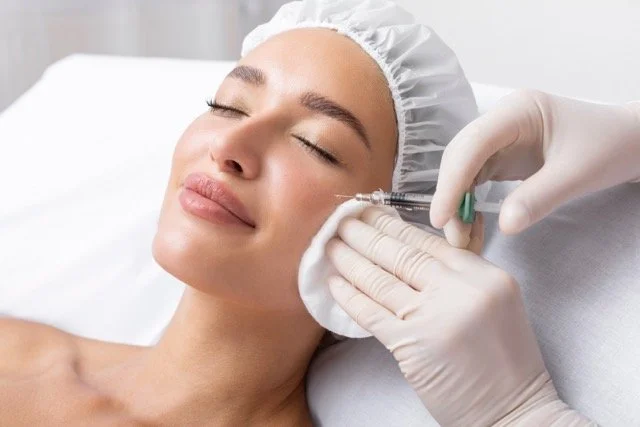
The way your website is built determines whether Google can find it, whether visitors trust it, and whether they book an appointment. For an anti-wrinkle clinic website design, structure is not an afterthought — it is the foundation of every result you will ever get from organic search. A well-structured anti-ageing clinic website communicates expertise to both search engines and prospective clients before a single word of copy is read.
Impact on SEO rankings
Search engines read your site's architecture to understand what you do and where you are. A clear aesthetic clinic website SEO structure — with a logical hierarchy, clean URLs, and properly interlinked pages — tells Google exactly which treatments you offer and which areas you serve. Clinics that invest in this foundation rank faster, rank more sustainably, and defend their positions against competitors more effectively.
Conversion rates and bookings
Structure drives conversions as directly as it drives rankings. A visitor who can navigate quickly from your homepage to a specific treatment page, read clear and compliant information, and find a booking button more easily is far more likely to convert. Clinic conversion rate optimisation is built into good site architecture from the outset — it is not something you retrofit.
Trust and credibility in aesthetics
In the aesthetic sector, credibility is everything. Clients are making decisions about their appearance and their safety. A well-designed cosmetic clinic UX that feels professional, loads quickly, and presents information clearly builds the kind of trust that turns a first-time visitor into a booked consultation. The structure of your site is, in itself, a trust signal.
Core Pages Every Anti-Wrinkle Clinic Website Needs
Every anti-wrinkle clinic website should be built around a set of core pages that each serve a specific purpose — for the client and for search engines. The table below outlines the essential pages and what each must achieve.
| Page | What It Must Do |
|---|---|
| Homepage | Value proposition, trust signals, CTA, compliant messaging |
| Treatment pages | Individual pages for anti-wrinkle injections, fillers, skin boosters |
| About / Practitioner | Qualifications, registrations, credibility narrative |
| Before & after gallery | ASA-compliant images with consent and disclaimers |
| Pricing / Consultation | Transparent guidance, consultation-first framing |
| Blog / Education hub | Long-tail keyword content, authority building |
| Contact & booking | Frictionless booking, GDPR-compliant forms, click-to-call |
Beyond the core pages, your dermal fillers website pages structure should include individual sub-pages for each treatment variant — lip fillers, cheek fillers, jaw contouring — so that each has its own dedicated URL and keyword target. The same principle applies to anti-wrinkle treatments: one page for the treatment category and individual pages for specific concerns such as forehead lines, crow's feet, and bunny lines. If you want this structure planned and built for your clinic, explore our aesthetic clinic website design service.
Ideal Website Architecture (SEO + UX)
Silo structure for aesthetic clinics
A silo structure organises your skincare clinic SEO structure into topic clusters: a hub page for the main treatment category, with supporting sub-pages for each specific treatment or concern linking back to it. For an anti-wrinkle clinic, the hub might be /anti-wrinkle-injections/ with sub-pages for individual areas. This content hierarchy concentrates topical authority and helps each page rank more effectively.
The treatment pages SEO principle is that Google assigns authority to a topic based on the depth of coverage, not just a single page. A site with a well-structured hub and five supporting sub-pages will consistently outrank a site with one standalone treatment page, all else being equal.
Internal linking hierarchy
Internal links are the connective tissue of a well-structured aesthetic clinic SEO strategy. Every sub-page should link back to its hub. The hub should link to relevant sub-pages. Treatment pages should cross-link to related treatments. The blog should link to treatment pages when relevant. These connections distribute authority across the site and give Google a clear map of your content. Good navigation practice dictates that no important page should be more than three clicks from the homepage.
URL structure best practices
Clean, descriptive URLs support both aesthetic clinic website SEO and user experience. The URL should reflect the site's content hierarchy precisely. For local SEO purposes, location sub-pages sit within the treatment folder, creating a clear signal for geo-targeted searches.
| URL | Purpose |
|---|---|
| /anti-wrinkle-injections/ | Hub treatment page — primary keyword target |
| /anti-wrinkle-injections/forehead-lines/ | Sub-page targeting specific concern |
| /anti-wrinkle-injections/london/ | Location sub-page for local SEO |
| /dermal-fillers/ | Second treatment hub |
| /dermal-fillers/lip-fillers/ | Sub-page by treatment area |
| /about/ | Practitioner credibility page |
| /book-consultation/ | Conversion-focused booking entry point |
Example Site Map
Reading about silo structure is one thing; seeing it mapped out is another. To make this easier to put into practice, we've put together three ready-to-use site map examples, from a simple core structure for a new clinic right through to a full multi-hub architecture for an established, multi-treatment practice. Use whichever structure matches where your clinic is right now.
Homepage Structure for Maximum Conversions
The homepage is the highest-traffic page on most clinic websites, and the most important to get right from a conversion optimisation perspective. Its structure should follow a clear hierarchy: value proposition above the fold, evidence of credibility in the mid-section, and a conversion mechanism at every scroll milestone.
Clear value proposition above the fold
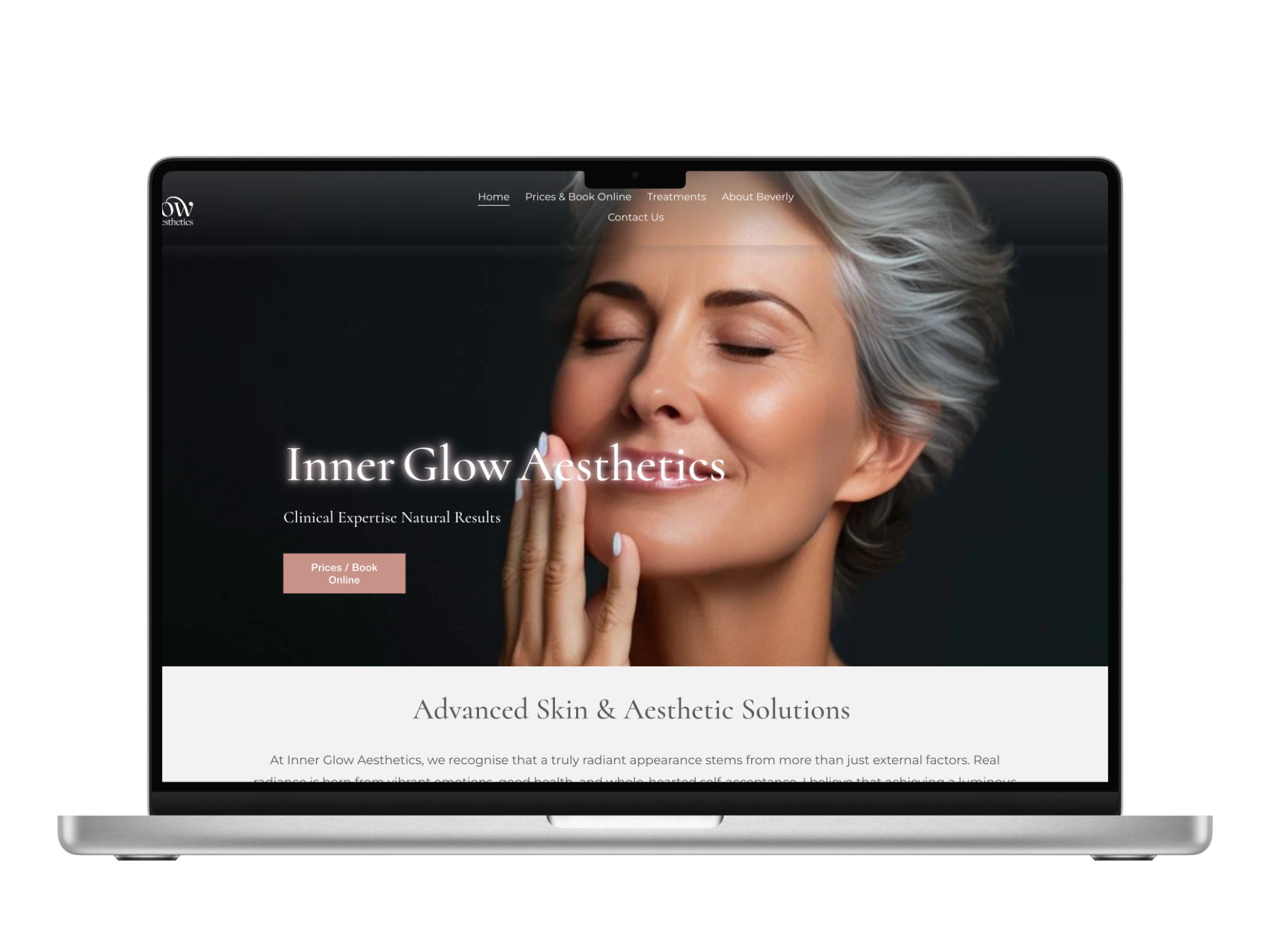
The first thing a visitor sees on your homepage should answer three questions immediately: what you do, who you do it for, and why you are the right choice. This is not the place for clinic history or general philosophy — it is the place for a specific, benefit-led headline and a visible call to action.
Trust signals — credentials, reviews, certifications
The mid-section of the homepage should be structured around the trust signals visitors are actively looking for: practitioner qualifications and registration body memberships (GMC, NMC, JCCP, Save Face), verified client reviews from Google or Trustpilot, awards and professional certifications, and before-and-after images where compliant. These elements reduce the psychological hesitation that stands between a visitor and a booking.
CTA placement and compliance-friendly messaging
Calls to action should appear above the fold, again at the mid-point of the page, and again at the footer. For compliant cosmetic clinic websites, the CTA should be framed around the consultation rather than the treatment: "Book Your Free Consultation" rather than "Book Your Anti-Wrinkle Treatment Today". This satisfies UK compliance requirements while remaining commercially effective.
| The homepage is not where you tell your story — it is where you answer the client's question: why should I trust this clinic with my face? |
Treatment Pages That Rank & Convert
Individual treatment pages are the workhorses of your organic search strategy. Each treatment should have its own dedicated page — not a section on a general treatments overview — with its own keyword target, its own structured content, and its own conversion mechanism. For anti-wrinkle clinics, this means separate pages for anti-wrinkle injections, dermal fillers, skin boosters, and other specific treatments.
Key sections every treatment page needs
A clear, keyword-targeted H1 — specific to the treatment, not generic
Compliant benefits section — framed as typical outcomes, not guarantees
Transparent pricing guidance or a prompt to enquire — simplifies the decision
Before-and-after gallery — ASA-compliant images with disclosure and consent
FAQs targeting long-tail search queries specific to that treatment
Internal links to related treatments and to the booking page
Practitioner credentials relevant to that treatment
The language across all treatment pages must observe UK advertising compliance standards: no direct promotion of prescription medicines by name, no guaranteed outcome claims, and no misleading before-and-after imagery. Within those parameters, there is substantial scope to write compelling, benefit-led content that converts effectively.
Once the page structure is in place, run the aesthetic clinic compliance audit to review treatment wording, metadata and consultation-led calls to action.
Booking Funnel & Conversion Optimisation (CRO)
The booking funnel should be designed around one principle: remove every unnecessary step between a visitor's intent and their booked appointment. Each additional click, form field, or page load is an opportunity for a potential client to abandon the process. Conversion optimisation for aesthetic websites focuses on streamlining this journey without sacrificing the compliance and trust signals that make it credible.
Consultation-first model (compliant for UK injectables)
For injectable clinic website compliance, the booking journey should lead to a consultation, not directly to a treatment booking. This is not just a regulatory requirement — it is better commercial practice. A client who has had a consultation is a qualified lead who understands their options, has had expectations set appropriately, and is far more likely to proceed with treatment and return in future.
Reducing friction — mobile UX and sticky CTAs
The majority of aesthetic clinic searches happen on mobile. Mobile-first clinic websites ensure that the booking journey works more easily on a small screen: forms that do not require excessive scrolling, click-to-call buttons that activate the phone dialler directly, and booking integrations that are optimised for mobile completion. Sticky CTAs — a button that remains visible as the user scrolls — consistently improve conversion rates. Our clinic websites with integrated booking systems are designed to reduce this friction while keeping the consultation journey clear and compliant.
Trust Signals That Increase Client Confidence
In the aesthetic sector, the decision to book a treatment involves a significant degree of trust. Clients are considering a procedure that affects their physical appearance, performed by a person they may never have met. The trust signals a clinic website incorporates must systematically address every layer of that trust consideration — from the practitioner's qualifications to the clinic's regulatory registrations to the evidence of previous results.
Practitioner qualifications and medical registration
The practitioner page is one of the highest-impact pages on a clinic website. It should display full name, professional qualifications, medical registration number (GMC, NMC, or equivalent), membership of professional bodies such as JCCP, Save Face, or BABTAC, and relevant training and CPD. In Ireland, HIQA registration where applicable. These are not decorative details — they are the primary factors in a prospective client's trust assessment.
Reviews, awards, and certifications
Verified reviews from Google Business Profile or Trustpilot carry significantly more weight than testimonials published on the clinic's own website, because they are perceived as independent. Awards and certifications from recognisable professional bodies contribute to the overall trust signal architecture. Where possible, display these with logos and links to the awarding organisation, so the claim is verifiable.
Before-and-After Galleries (Compliance + UX)
A well-structured before-and-after gallery is one of the most powerful conversion tools available to an aesthetic clinic — and one of the most regulated. Getting it right requires balancing the commercial value of visual proof with the strict requirements of ASA compliance.
ASA-compliant image usage
All images in your before-and-after gallery must meet the following standards: consistent photography conditions (same lighting, angle, and makeup status in both shots), no misleading post-processing, written client consent obtained and retained, and a clear disclaimer that results are individual and not guaranteed. Any deviation from these standards creates a compliance risk that can result in an ASA ruling against the clinic.
Structuring galleries for SEO
From a treatment page SEO perspective, before-and-after galleries should be structured within or adjacent to the relevant treatment page rather than in a standalone gallery. This reinforces the topical relevance of the treatment page and ensures the images contribute to the page's SEO value. Each image should have descriptive alt text that references the treatment and area treated — without making outcome claims.
Local SEO Structure for Anti-Wrinkle Clinics
For the vast majority of aesthetic clinics, the most valuable organic traffic is local — people searching for treatments in a specific town or city. Structuring your site for local SEO is therefore a core strategic priority, not a secondary consideration.
Location pages — anti-wrinkle injections in [City]
Dedicated location pages — structured as /anti-wrinkle-injections/[city]/ — allow your site to rank for specific geo-targeted searches such as "anti-wrinkle injections Dublin" or "anti-wrinkle injections London". Each location page must be genuinely useful to a person in that area: a description of the clinic's location, travel information, local context, and treatment information specific to that page's keyword target. Thin location pages with near-duplicate content are penalised by Google.
Google Business Profile integration
Your Google Business Profile (GBP) is the second most important local SEO asset after your website. It must be fully completed — accurate NAP (name, address, phone), current opening hours, treatment categories, photos updated regularly, and review responses published promptly. NAP consistency — your name, address, and phone number identical across all online appearances — is a foundational local SEO requirement.
Local schema markup
Schema markup — specifically MedicalBusiness or LocalBusiness schema — tells Google structured information about your clinic: its name, location, opening hours, services, and contact details. This supports local SEO by providing Google with unambiguous data for local search results, knowledge panels, and map listings. Schema markup should be implemented on the homepage and on all location pages.
-
{
"@context": "https://schema.org",
"@type": "MedicalProcedure",
"name": "Dermal Fillers",
"alternateName": "Hyaluronic Acid Fillers",
"description": "Dermal filler treatment using hyaluronic acid-based injectable gel to restore volume, smooth lines, and enhance facial contours such as the lips, cheeks, and jawline.",
"procedureType": "https://schema.org/NoninvasiveProcedure",
"bodyLocation": [
"Lips",
"Cheeks",
"Jawline",
"Nasolabial folds"
],
"howPerformed": "Administered by injection into targeted areas of the face using a fine needle or cannula, following a full consultation and skin assessment.",
"preparation": "A consultation to assess suitability, discuss desired outcomes, and review medical history.",
"followup": "Results typically last 6 to 18 months depending on the product and treatment area. A review appointment may be recommended.",
"medicineSystem": "https://schema.org/WesternConventional",
"provider": {
"@type": "MedicalBusiness",
"name": "Your Clinic Name",
"url": "https://www.yourclinicwebsite.com",
"telephone": "+353-1-234-5678",
"address": {
"@type": "PostalAddress",
"streetAddress": "1 High Street",
"addressLocality": "Dublin",
"addressCountry": "IE"
}
}
}
Blog & Content Hub for Authority Building
A regularly updated blog is one of the most cost-effective SEO investments available to an aesthetic clinic. It generates long-tail keyword traffic, builds topical authority, creates internal linking opportunities to treatment pages, and produces content that can be shared and referenced — generating backlinks that strengthen the site's overall domain authority.
Educational content over promotional claims
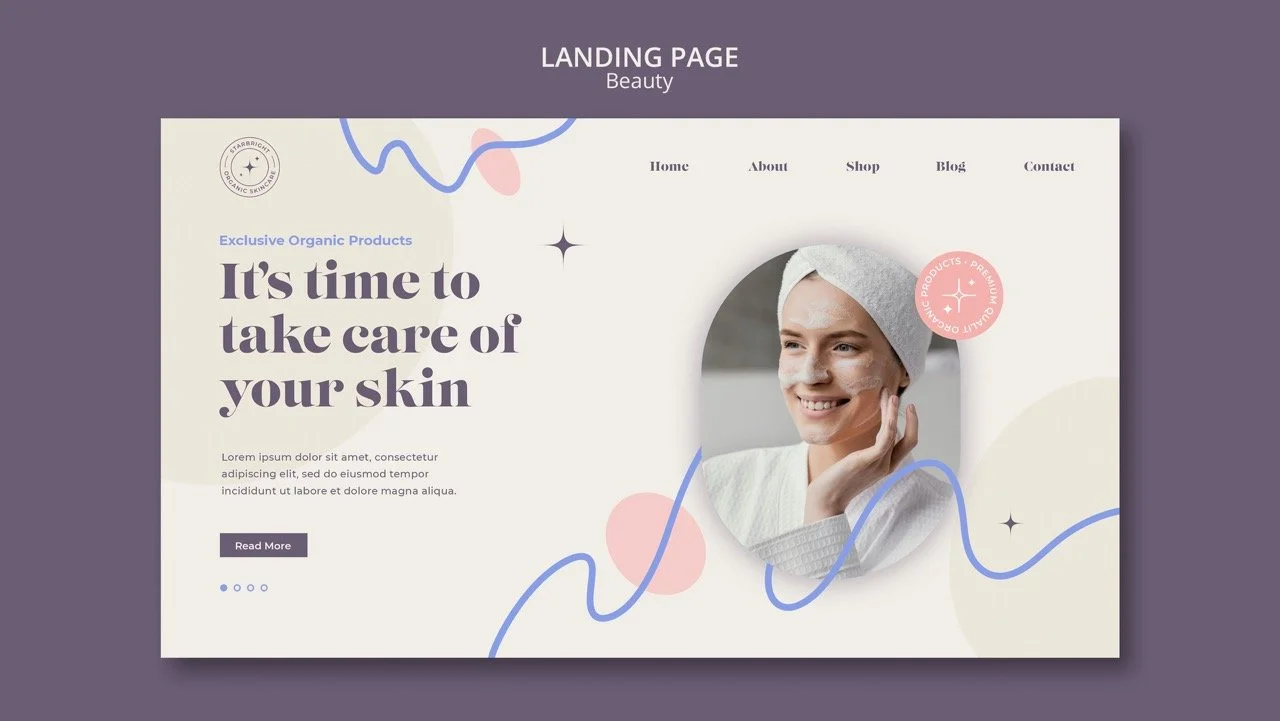
The content hub should be structured around educational topics, not promotional ones. This is both a compliance requirement — blog posts are marketing communications and subject to ASA rules — and better SEO strategy. Educational content captures clients who are in the research phase of their decision, before they have identified a clinic. Attracting them at this stage and establishing authority is more effective than competing solely for bottom-of-funnel search terms.
Example content topics
"How long do anti-wrinkle injections last?" — targets high-volume question query
"Are anti-wrinkle injections safe?" — addresses the primary trust concern
"What is the difference between anti-wrinkle injections and fillers?" — comparison intent
"What to expect at your first aesthetic consultation" — pre-purchase intent
"Anti-wrinkle injection aftercare guide" — retention and authority signal
Each blog post should link to the most relevant treatment page and include a call to action to book a consultation. This turns the content hub into a consistent lead generation mechanism, not just a publishing exercise.
Mobile-First Design & UX Essentials
Google uses mobile-first indexing, which means it evaluates your website's mobile version when determining search rankings. For clinic websites, this is not optional: if your site performs poorly on mobile, your rankings, your traffic, and your bookings will all suffer. The majority of aesthetic clinic searches happen on a mobile device, often during commutes or in the evening, so the mobile experience is the experience for most of your prospective clients.
Fast loading speeds and Core Web Vitals
Core Web Vitals — Google's suite of loading, interactivity, and visual stability metrics — are a confirmed ranking signal. Clinic websites must pass Core Web Vitals benchmarks to compete effectively in search. This means optimised images, efficient code, fast server response times, and avoidance of layout shift caused by late-loading elements. A clinic website that loads in under two seconds on mobile converts significantly better than one that takes four seconds or more.
Click-to-call and mobile booking
Every phone number on a mobile-optimised clinic site should be wrapped in a click-to-call link, so that tapping it on a mobile device immediately initiates a call. The booking form should be minimal — name, email, treatment of interest, and preferred date or time — with no unnecessary fields. Where a third-party booking integration is used, it should be embedded directly in the page rather than redirecting to an external URL.
Compliance Considerations (UK & Ireland)
All content on an aesthetic clinic website must satisfy both ASA (UK) and, for Irish clinics, ASAI advertising rules. Non-compliance carries regulatory risk — upheld ASA rulings are published publicly and indexed by Google — and reputational risk that can materially affect clinic bookings.
ASA & CAP Code (UK)
The injectable clinic website compliance requirement is clear: botulinum toxin is a prescription-only medicine (POM), and it cannot be directly advertised to consumers by name. Clinics should instead promote the consultation, the concern being addressed, and the outcome — framing content around 'lines and wrinkles' rather than the specific injectable. All other claims must be substantiated, results-based language must be appropriately hedged, and before-and-after imagery must meet ASA compliance standards.
ASAI Guidelines (Ireland)
The ASAI framework applies the same fundamental principles as the ASA — truthful, substantiated, non-misleading marketing — with some differences in enforcement approach and specific provisions. For clinics operating in Ireland, all content on the website falls within ASAI scope if it is directed at Irish consumers. GDPR requirements also apply to Irish websites under the GDPR framework, with data protection obligations around consent, cookies, and the handling of client enquiries.
| COMPLIANCE NOTE | This article provides general guidance on website compliance for aesthetic clinics. It is not legal advice. For specific compliance queries, consult a qualified advertising law solicitor or contact the CAP Copy Advice team directly. |
Technical SEO Essentials for Clinic Websites
A strong aesthetic clinic website SEO strategy requires a technically sound foundation. Content and links cannot do their job if the site has structural technical issues that prevent Google from crawling, indexing, or understanding it correctly.
Schema markup
MedicalBusiness and LocalBusiness schema markup provides Google with structured data about the clinic: its name, address, phone number, opening hours, and the services it offers. This directly supports local SEO by enabling rich results in Google Search and contributing to local pack prominence. Treatment pages can additionally use MedicalProcedure schema to provide structured information about specific procedures.
HTTPS, GDPR, and data security
All clinic websites must operate on HTTPS — an absolute requirement for GDPR compliance and for Google rankings. Contact and booking forms must include explicit consent checkboxes, cookie consent must be implemented correctly, and any client data collected must be handled in accordance with GDPR. Non-compliance with GDPR carries regulatory risk from the ICO in the UK and the Data Protection Commission in Ireland.
Image optimisation and breadcrumbs
Images should be compressed and served in WebP format where possible, with descriptive alt text on every image. This supports both mobile performance targets and accessibility. Breadcrumb navigation — a hierarchical trail showing the user's position within the site — supports good navigation practice and provides Google with an additional signal of the site's content hierarchy. For clinics that want these technical foundations implemented during the build, see our SEO-ready websites for aesthetic clinics.
Frequently Asked Questions
What pages should an anti-wrinkle clinic website have?
At minimum: a homepage, individual treatment pages for each service (anti-wrinkle injections, dermal fillers, skin boosters), a practitioner/about page, a before-and-after gallery, a pricing or consultation page, a blog, and a contact and booking page. Each treatment should have its own page, not a section within a general treatments overview.
How do you structure a cosmetic clinic website for SEO?
Use a silo structure: a hub page per treatment category, with sub-pages for specific treatments and location pages within the treatment folder. Implement clean, keyword-rich URLs. Build a clear internal linking hierarchy. Ensure every important page is reachable within three clicks of the homepage. Apply schema markup, Core Web Vitals compliance, and HTTPS throughout.
Can anti-wrinkle clinics promote injectable treatments on their website?
Not by name. Botulinum toxin is a prescription-only medicine (POM) and cannot be advertised to consumers by name under UK law. Injectable clinic website compliance requires that promotional content focuses on the concern being addressed (lines, wrinkles) and the consultation process, not on the specific injectable. In Ireland, the same principle applies under ASAI guidelines.
What makes a high-converting clinic homepage?
A clear value proposition above the fold, trust signals visitors expect (practitioner qualifications, verified reviews, professional memberships), a consultation-first CTA framed compliantly, and a logical scroll journey that addresses concerns, provides evidence, and makes booking easy. The homepage should answer the visitor's three questions immediately: what you do, who you serve, and why you can be trusted.
Do before-and-after photos improve conversions?
Yes — when used compliantly. Before-and-after images that are authentic, consistently photographed, and accompanied by appropriate disclaimers are among the most effective conversion tools for aesthetic clinics. They provide visual proof of results and build confidence in the practitioner's skill. Misleadingly edited images carry significant compliance risk.
How important is local SEO for aesthetic clinics?
It is the highest-priority SEO channel for most clinics. The vast majority of aesthetic treatment decisions are made locally — clients are not willing to travel significant distances for routine treatments. Local SEO — including Google Business Profile optimisation, location pages, NAP consistency, and local schema markup — determines whether your clinic appears when someone in your area searches for treatments.
What is the best URL structure for clinic websites?
A hierarchical structure that mirrors the content silo: /treatment-category/ for hub pages, /treatment-category/specific-treatment/ for sub-pages, and /treatment-category/location/ for local SEO targeting. URLs should be lowercase, use hyphens between words, omit unnecessary words, and be consistent across the site. The URL is both a ranking signal and a user experience element.
How can clinics improve booking conversions online?
Optimise the booking funnel by making the process as simple as possible at every step: embed the booking system directly in the page, minimise form fields, ensure the process works smoothly on mobile, use sticky CTAs on long pages, and frame the booking action around the consultation rather than the treatment. For conversion rate optimisation, A/B test CTA wording, placement, and colour. Even small improvements compound significantly over time.
Ready to build a website that ranks, converts, and stays compliant?
Websites for Clinics builds SEO-ready websites for aesthetic clinics across Ireland and the UK, including treatment-page structure, booking integration, compliance-aware content and technical SEO. Explore our aesthetic clinic website design service or book a consultation to discuss your project.